


Field Etiquette — A Gun's Guide to the Day
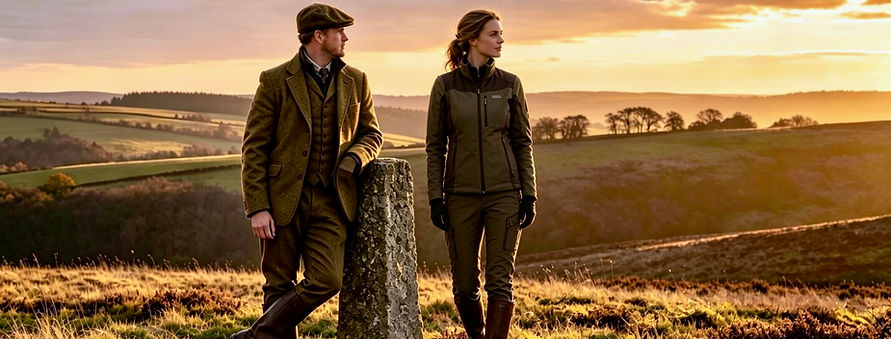
How a Shooting Day Should Be Done
From the moment you accept the invitation to the last tip of the day — the unwritten rules that define a true Gun.
A TRADITION CENTURIES IN THE MAKING
Driven shooting didn't just happen. It was built — drive by drive, season by season.
The roots of shooting in Britain stretch back to medieval times, when hunting was both a necessity and a mark of status among the nobility. By the 16th and 17th centuries, the gentry had taken to bird shooting across private estates, and the sport began its long evolution from survival tool to cherished tradition.
It was the Victorian era that gave driven shooting the shape we recognise today. The arrival of the breech-loading shotgun transformed the sport — suddenly, rapid reloading was possible, and driving birds over a fixed line of Guns became not just viable, but spectacularly exciting. The expanding railway network opened up the great grouse moors of Scotland and northern England to the Edwardian elite, and the grand country house shooting party became the social event of the season.
(King George V himself, watching a record bag of 3,937 pheasants fall at Hall Barn in 1913, was said to have remarked quietly — "Perhaps we overdid it today."
That era of excess has long since given way to something more measured and purposeful. The sport today is built on conservation, community and respect — for the quarry, for the land, and for every person on the shoot. The etiquette that has evolved over those centuries is not stuffy protocol. It is the practical expression of those values. Know it, follow it, and you will always be welcomed back.
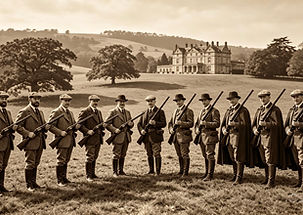
The roots of shooting in Britain stretch back to medieval times, when hunting was both a necessity and a mark of status among the nobility. By the 16th and 17th centuries, the gentry had taken to bird shooting across private estates, and the sport began its long evolution from survival tool to cherished tradition.
It was the Victorian era that gave driven shooting the shape we recognise today. The arrival of the breech-loading shotgun transformed the sport — suddenly, rapid reloading was possible, and driving birds over a fixed line of Guns became not just viable, but spectacularly exciting. The expanding railway network opened up the great grouse moors of Scotland and northern England to the Edwardian elite, and the grand country house shooting party became the social event of the season.
<small>(King George V himself, watching a record bag of 3,937 pheasants fall at Hall Barn in 1913, was said to have remarked quietly — "Perhaps we overdid it today.")</small>
That era of excess has long since given way to something more measured and purposeful. The sport today is built on conservation, community and respect — for the quarry, for the land, and for every person on the shoot. The etiquette that has evolved over those centuries is not stuffy protocol. It is the practical expression of those values. Know it, follow it, and you will always be welcomed back.
BEFORE THE DAY
-
Reply promptly and in writing when you receive an invitation. A text is considered poor form. Accept, or decline with explanation — never leave it hanging.
-
Do not cancel once you have accepted. A shoot day involves months of preparation, and your peg affects the whole line. Unless it is a genuine emergency, you honour the commitment.
-
Confirm the details — quarry species, expected bag, arrival time, dress code, whether lunch is included and whether dogs are permitted. Ask your host rather than assume.
-
Visit the cash machine before you leave. You will need notes for the keeper and beaters — not coins, not a bank transfer. This is one tradition that hasn't modernised.
-
Bring something to contribute. A bottle of sloe gin, damson vodka, port or a good whisky for the mid-morning break is always well received. If you know the shoot, homemade brownies or a tin of shortbread for the beaters' hut will earn you more goodwill than you know.
-
Check your kit the night before. Shotgun certificate, cartridges (more than you think you'll need — running out mid-drive is genuinely embarrassing), ear defenders, appropriate clothing, and a full hip flask.
-
Arrive early. Not on time — early. Five or ten minutes in hand. Country estates are often remote, Sat Navs don't always cooperate, and nobody enjoys watching eight Guns stand in a field while the ninth comes down the lane.
THE MORNING MEET

Introductions, briefings and the draw — the day's first ritual.
When you arrive, find your host or shoot captain and introduce yourself — and introduce yourself to every other Gun in the party. You are about to spend the day alongside these people, sharing some of the best moments the British countryside has to offer. Get the ice broken early. Shooting is an inherently sociable pursuit and the relationships forged at elevenses and on the gunbus are some of the most enduring in field sports.
-
Tea, coffee and perhaps breakfast will usually be provided before the shooting starts. Enjoy them — but be ready to move the moment the shoot captain calls.
-
The safety briefing is not optional listening. The captain will cover quarry, signals, peg rotation, expected flank birds, rights of way and safety arcs. Listen to every word. Ask questions if anything is unclear. Your life — and the life of those around you — may depend on it.
-
The peg draw is one of the great rituals of the driven day. On many shoots you'll draw a numbered peg — on others, as the old tradition has it, your number may be revealed at the bottom of a glass of sloe gin. Either way, accept your peg with good grace. A back peg or a quiet peg is part of the game. Complaining about it is not.
-
Note your peg rotation and understand when and how you will move between drives. Moving up two or three pegs is typical.
-
The day sweep is a good-natured tradition on many shoots — a small wager on the bag total. Put in, take part and enjoy the maths of it.
ON THE PEG
Know your arc. Know your birds. Know your limits.
Arc of Fire — The Rule That Keeps Everyone Safe
Before a single bird appears over the treeline, take a moment on your peg. Look left, look right, look behind. Where are your neighbouring Guns? Where are the pickers-up? Are there stops or flankers in the hedgerow? Give the neighbouring Gun a wave — they should see you, and you should see them.
Your safe arc of fire in driven shooting runs from roughly 45 degrees to your left to 45 degrees to your right — and always above the horizontal. Never shoot low. Never shoot into a wood or a hedge. Never swing your barrels through the line. There is no bird in the sky that is worth breaking that rule. Not one.
When waiting between flushes, your gun should be broken over the arm or barrels pointing directly upward. Resting a closed gun on your shoulder with barrels pointing back may feel comfortable — but the picker-up standing on the bank behind you is looking straight down your barrels. Think about it.
Whose Bird Is It? The Art of Leaving a Bird to Your Neighbour
This is perhaps the most nuanced — and most frequently misunderstood — aspect of driven shooting etiquette. And it comes down to one simple principle: driven shooting is not crossing-bird shooting.
A bird flying straight and high over your peg is yours. A bird curling hard left on a trajectory that will carry it perfectly over your neighbour's peg in two seconds' time? That is your neighbour's bird. Leave it. Let it travel. Watch them take it — or miss it.
Here is the thing that experienced Guns understand and newer Guns sometimes don't: a bird that is crossing you and heading toward your neighbour will, by the time it reaches them, be presenting a far better, higher, more sporting shot than it was ever going to offer you. By holding off and letting it go, you are not losing a bird. You are giving your neighbour the best shot of the drive.
That is shooting generosity. That is what separates a good Gun from a greedy one. And you will be noticed for it — by the keeper, by your host, and by every experienced sportsman in the line.
-
If your neighbour misses it cleanly and it carries on over the back — then by all means, take the shot as it comes to you. That is not stealing; that is backing them up. "Wiping their eye" is acceptable. Doing it habitually before they've even had a chance is not.
-
A bird that is crossing you but is clearly at the wrong height, range or angle for them — yours. Use your judgement.
-
If you are having a dominant drive and your neighbour is getting very little, be generous. Invite them to take the occasional bird over your peg. It costs you nothing and it builds the kind of goodwill that makes a shoot day great.
-
Never brag about your bag. Nobody is impressed and the keeper is watching.
The Birds Themselves
Only shoot what you can kill cleanly and retrieve reliably. A pricked bird that runs is a failure — a wasted life and an unnecessary loss that reflects on every Gun in the line.
Do not shoot at birds that are too close — they cannot be eaten and they cannot be sold. A "pillow-cased" bird riddled at ten yards is not a sporting shot.
Do not shoot at birds that are beyond your honest capability. A wounded bird sailing over the back is not heroic — it is irresponsible.
When the horn or whistle blows — stop. Immediately. No exceptions. There is no bird that justifies pulling the trigger after the signal. Not even the bird of a lifetime.
ELEVENSES - The mid-morning break — where the day finds its soul.

There is something almost sacred about elevenses on a shoot day. Two drives done, the air cold on your face, the smell of gunpowder still in your coat — and the tailgate of an old Defender swinging open to reveal a spread that would put most cafés to shame.
Sausage rolls still warm from the oven. Pork pies. Scotch eggs. Fruitcake. A flask of soup. Sloe gin passed hand to hand, perhaps a warming port, a sip of something a Gun brought from home. This is the moment the day stops being about the shooting and becomes about everything else — the friendships, the dogs, the banter, the shared reverence for the countryside you're standing in.
-
Bring something to the party. A bottle of good sloe gin, port, damson vodka or a warming whisky is always welcome. It doesn't need to be expensive — it needs to be thoughtful.
-
If you shoot with a syndicate, bring something for the beaters' hut too. A bottle for the end of the day, or homemade food for their break, is one of the most generous gestures a Gun can make — and most rarely do it.
-
Do not be on your phone at elevenses, or at any point during the day. Switch it off. The field is not the office. Your fellow Guns will not forget it if you spent the morning replying to emails.
-
Drink sensibly. The tradition of sloe gin and a glass at lunch is a good one. Overindulging while holding a shotgun is not. Know your limits and keep a margin. The shooting comes first — always.
-
Engage with everyone — your host, the other Guns, the keeper, the beaters if the shoot allows it. Ask the keeper how the season has gone. He has been working since before dawn every day since August to give you this day. Show him you know that.
END OF DAY
How you finish the day matters as much as how you shoot it.

The Bag
When the last drive ends, the bag will be counted and laid out in the traditional manner. This is a moment of genuine ceremony — one that connects every shoot day directly to the Edwardian shoots of a century ago. Stand with the line, acknowledge the day's work, and pay your respects to the quarry. Accept your brace of birds. Cook them, share them, gift them if you must — but take them. They are food. They are the point.
A retired gamekeeper once said it plainly: "I would far rather have £10 given graciously by an impoverished gentleman than £50 from a wealthy man with no manners at all." That says everything.
-
Go to the beaters' hut first. Before the lodge, before the drinks, before you load the car. Walk in, shake hands, thank them properly and leave something for their efforts. They have been in the brambles and ditches since before your first drive. Beaters work hard in conditions that most Guns never experience. Recognise that.
-
Then thank the catering staff, whoever prepared elevenses and lunch. Say it clearly and genuinely. They made the day civilised.
-
Finally, find the keeper. Do not rush this. This is the single most important tip you will give all season. The keeper has been working 12-month days — rearing, releasing, feeding, managing predators, cutting rides, building drives — all so you could stand on a peg and have the day you just had.
-
Tipping the keeper: A widely accepted guide is £20 for a 100-bird day, plus roughly £10 for every additional hundred birds. If you were a guest on someone else's tab — tip generously. You didn't pay for the day. A £100 tip on a 300-bird invite is still extraordinary value. If you have had a particularly fine day — tip above. If you have a reputation as a poor tipper, you will not lose it easily.
-
Tipping the beaters and pickers-up: £10–£20 per person is the going rate on most shoots. On larger commercial days your host or shoot captain will advise. Hand it discreetly. Combine it with genuine thanks.
-
The handshake with the keeper should be a real one. Ask him how he thought the day went. Ask which drive he was most pleased with. He will remember that you asked.
-
Write a note to your host before you go to bed that night — ideally a proper handwritten note in the post. At minimum, a genuine email the same evening. Not a text. A thank-you that reflects the effort that went into your day.
-
Do not leave before the end of lunch if the day finishes with a meal. Disappearing before it's over is considered very poor form.
PEG DRAW'S TOP TIPS FOR FIELD ETIQUETTE
From the first handshake to the last tip of the day — the essentials,
plain and simple.
TIP 1 🤝 Reply Properly Accept or decline an invitation in writing, promptly. Never leave it unanswered, never cancel unless it's a true emergency.
TIP 2 💷 Bring Cash You will need it for the keeper and beaters. Visit the cash machine before you leave home — not on the way.
TIP 3 🥃 Bring Something for the Day A bottle of sloe gin, port or a good whisky for elevenses. If you really want to stand out — bring something for the beaters' hut too.
TIP 4 ⏰ Arrive Early Not on time — early. Five minutes in hand shows respect for everyone waiting.
TIP 5 👂 Listen to the Safety Briefing Every word of it. Ask questions if anything is unclear. This is not a formality.
TIP 6 🎯 Know Your Arc of Fire Safe shooting is 45 degrees either side of your peg, always above the horizontal. Never swing through the line. Never.
TIP 7 🐦 Leave the Crossing Bird A bird curling toward your neighbour's peg is theirs. Let it go — it will present a better shot for them than it ever would for you. This is generosity in its purest form.
TIP 8 📵 Put the Phone Away All day. No exceptions. The field is not the office.
TIP 9 🛑 Stop at the Whistle Immediately. Always. The drive is over the moment you hear that signal.
TIP 10 🎮 Accept Your Brace Take the birds. They are food. Cook them, share them, cherish them — but never refuse.
TIP 11 🐕 Thank Every Person on the Day Beaters' hut first. Then catering. Then the keeper. Then your host. In that order.
TIP 12 ✍️ Write the Note A handwritten thank-you in the post, the evening of the day. It is the mark of a shooter who understands what the day truly cost the people who made it possible.